Built to
make it.
Koa Media is the production record behind Koa Studio. Not a portfolio in the traditional sense — more like a body of evidence. The shoots, the systems, the sites, the sets. This is where that work lives.
It started in broadcast, which is the best possible place to learn how unforgiving this industry is. KOMO. King TV. Local news is a pressure cooker — deadlines that don't move, gear that breaks at the worst moment, and no one coming to save you. You either figure it out on the fly or you don't come back tomorrow. That environment builds a certain kind of instinct that no classroom ever could.
From there, the work scaled up. American Idol. Microsoft. T-Mobile. Each stop brought a different world — different budgets, different expectations, different definitions of "good enough." The throughline was always the same: show up, solve the problem, deliver something worth watching.
Two decades in, the resume reads like a contradiction. Broadcast journalism and live entertainment. Corporate production and consumer technology. Creative direction and network infrastructure. It only makes sense when you understand that curiosity was always the driver — not a career plan.
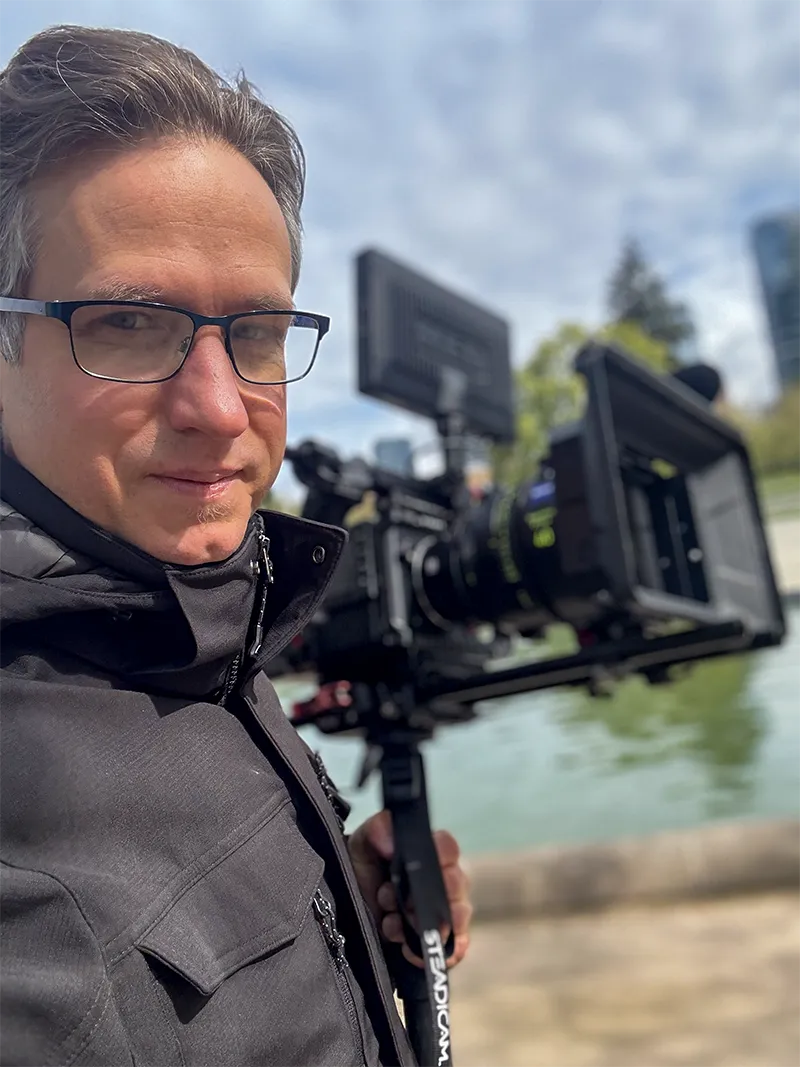
There's an old line about loving what you do and never working a day in your life. It gets repeated so often it starts to sound hollow. But standing behind a camera — really behind it, dialed in, reading the light, waiting for the moment — that never felt like work. Not once. Not in twenty years.
That's the honest truth about where this all comes from. The craft wasn't a means to an end. It was the point. Director of Photography. Editor. Colorist. Photographer. Each one a different way of asking the same question: how do you make something that makes people feel something?
The technical side came out of necessity at first — you learn to wire a set because the AV guy didn't show up, you learn to build a network because the files need to move faster. But somewhere along the way, the systems work became its own kind of creative act. Designing infrastructure that performs under pressure isn't that different from lighting a set. Both require knowing exactly what you want before you touch anything.
Koa Studio exists because at some point the architecture became more interesting than the execution. Not because the production work lost its appeal — it didn't, and honestly it never will — but because the highest-leverage thing to offer stopped being the ability to hold a camera and became the ability to design the system around the person holding it.
That shift didn't happen overnight and it didn't mean walking away from anything. It meant recognizing that twenty years of hands-on production work is exactly what makes the systems thinking credible. Anyone can draw a diagram. Not everyone has spent two decades in the rooms where those diagrams either work or they don't.
Koa Media is the proof of work. Koa Studio is what it made possible.